The Nature of Civita
The Valle dei Calanchi and the geology that sculpts the landscape
The Valle dei Calanchi
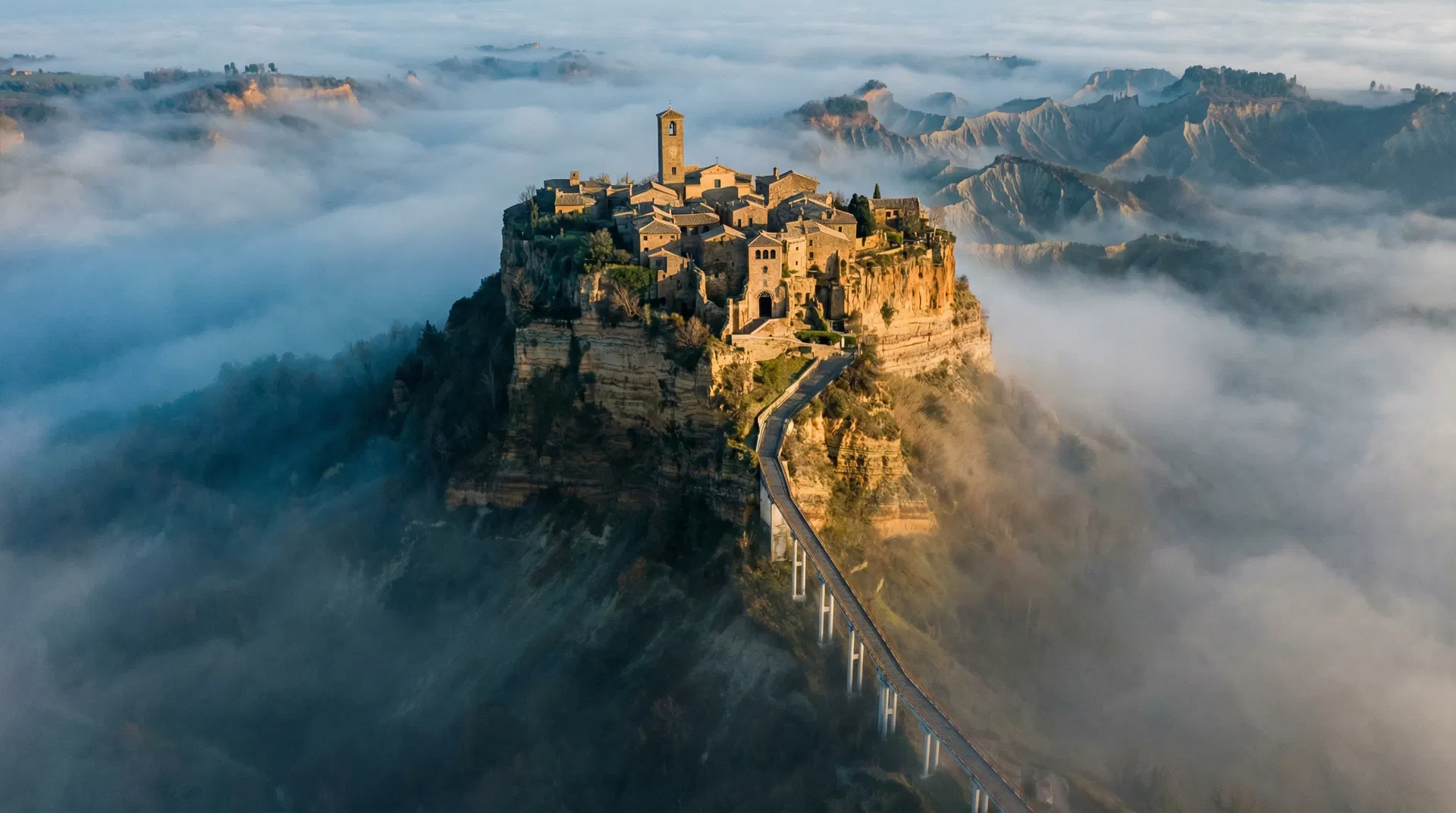
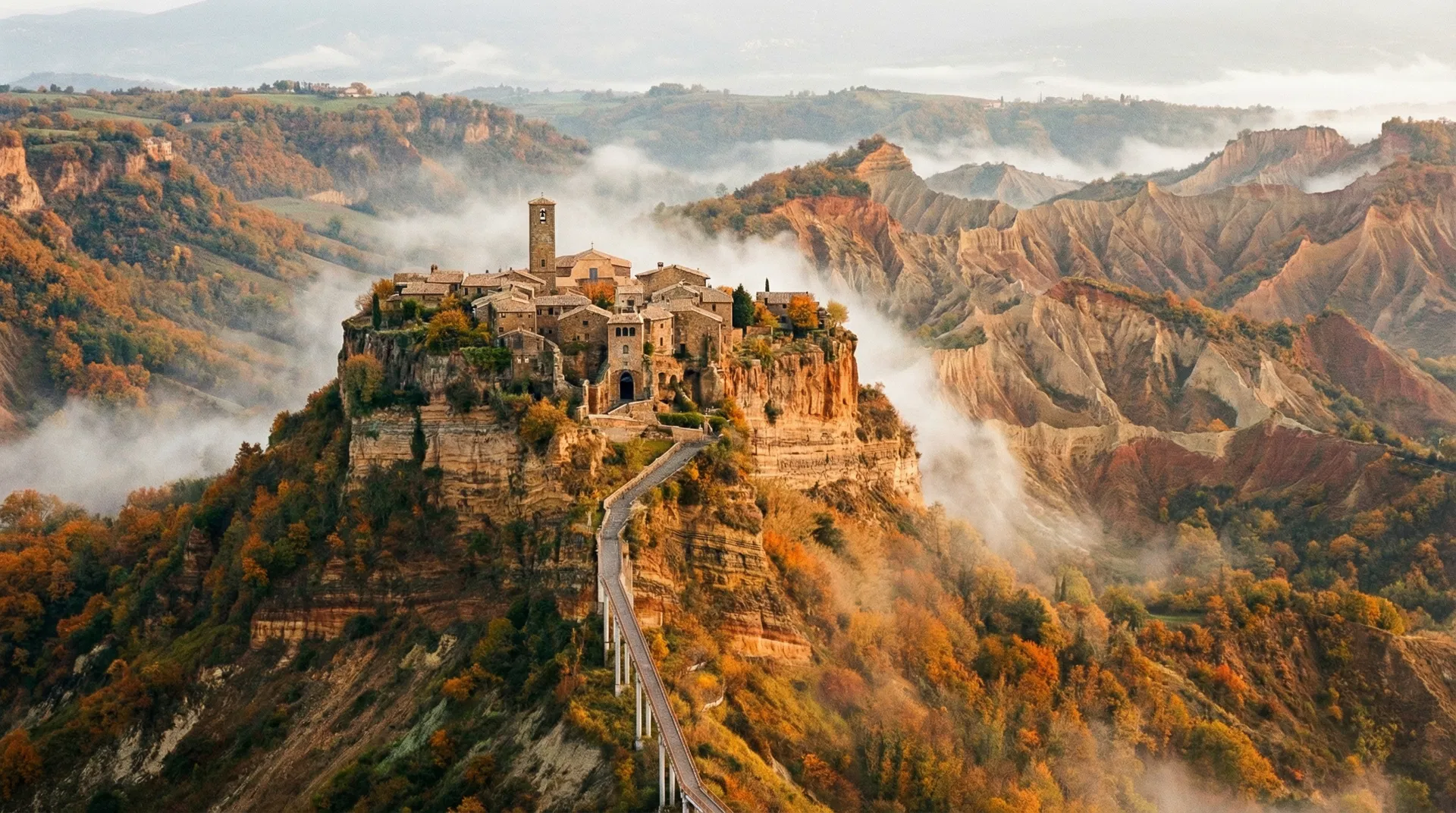
The calanchi are spectacular geological formations created by the erosion of prehistoric marine clays by rain, wind, and the Rio Chiaro and Rio Torbido streams. The result is a lunar landscape of sharp ridges, pinnacles, and deep gorges that surrounds Civita like a petrified sea. The Valley has been proposed as a Site of Community Importance (SCI) since 2005 and represents one of Italy's most unique ecosystems.
The Geology of Civita
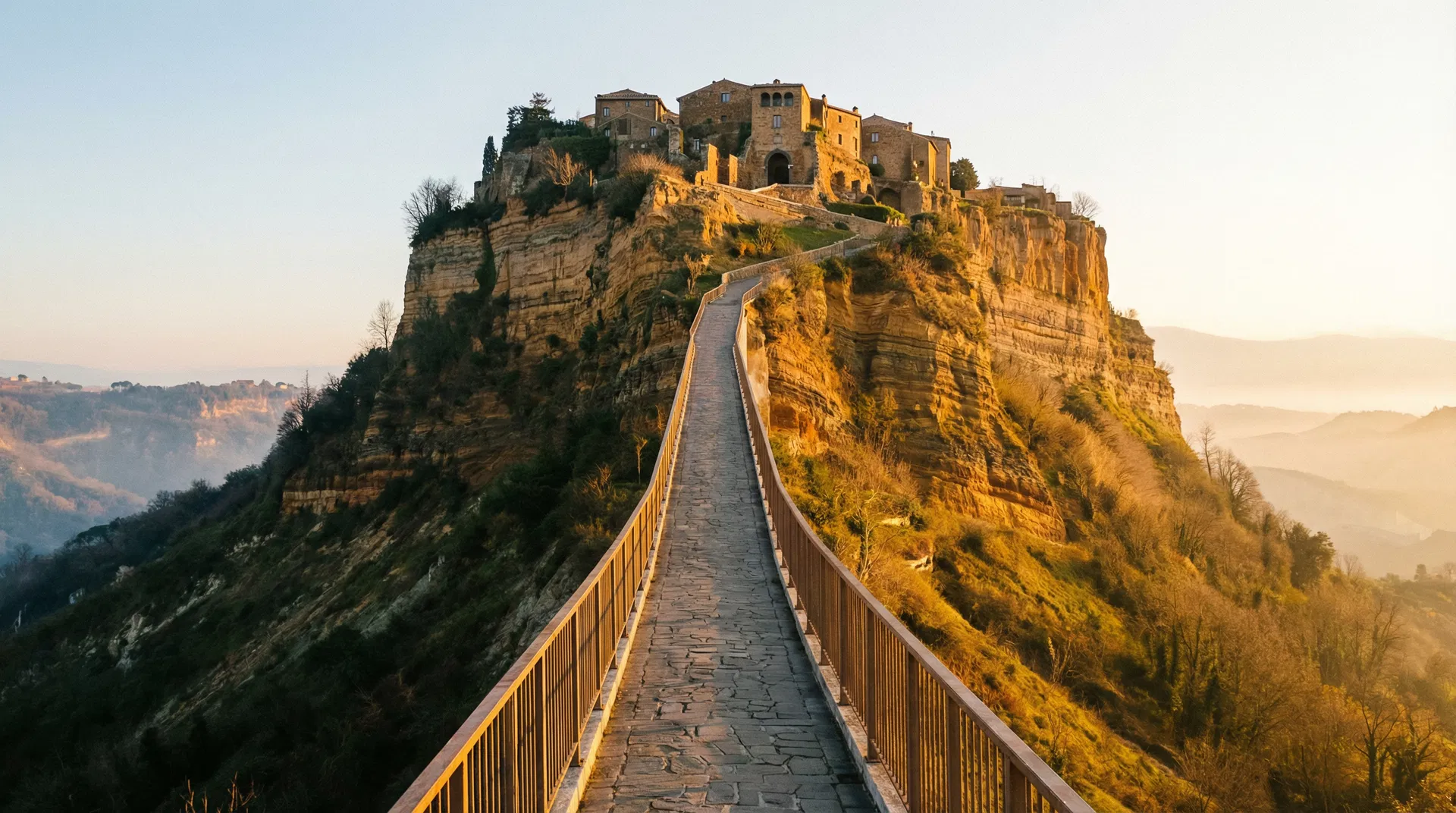
The spur on which Civita stands is composed of a double layer: volcanic tufa above, friable clays below. This is the reason for its fragility. Erosion proceeds by millimeters each year, relentless. Engineer Archimede Sardo dedicated over 50 years of his life to consolidation work. The Geological and Landslide Museum, with its 4 rooms dedicated to landslides, fossils, Civita, and monitoring, is the scientific reference point for understanding this phenomenon.
Flora and Fauna
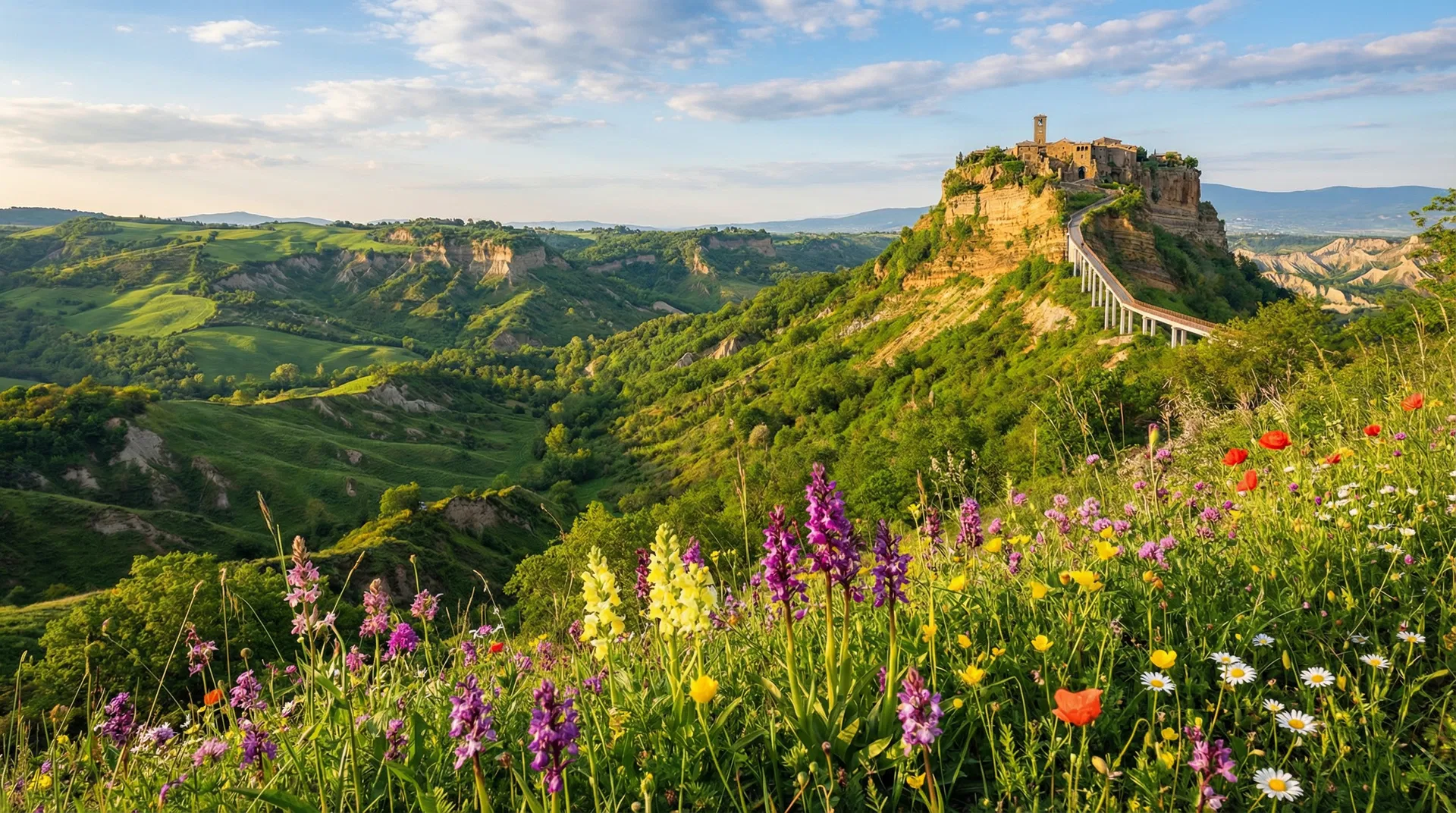
The Valle dei Calanchi hosts unique ecosystems. Between March and April, wild orchids bloom on the clay slopes, creating patches of color in an otherwise lunar landscape. The fauna includes raptors, foxes, porcupines, and a rich variety of insects and reptiles adapted to this extreme environment.
The Mists of Civita
The most photographed phenomenon of Civita: the autumn and winter mists that envelop the Valle dei Calanchi and literally make the village "float" in the sky. This natural spectacle, which occurs mainly in the early morning hours between October and February, is what inspired the connection with Miyazaki's "Laputa — Castle in the Sky." To photograph the mists, the best time is dawn, from the Belvedere of Bagnoregio.